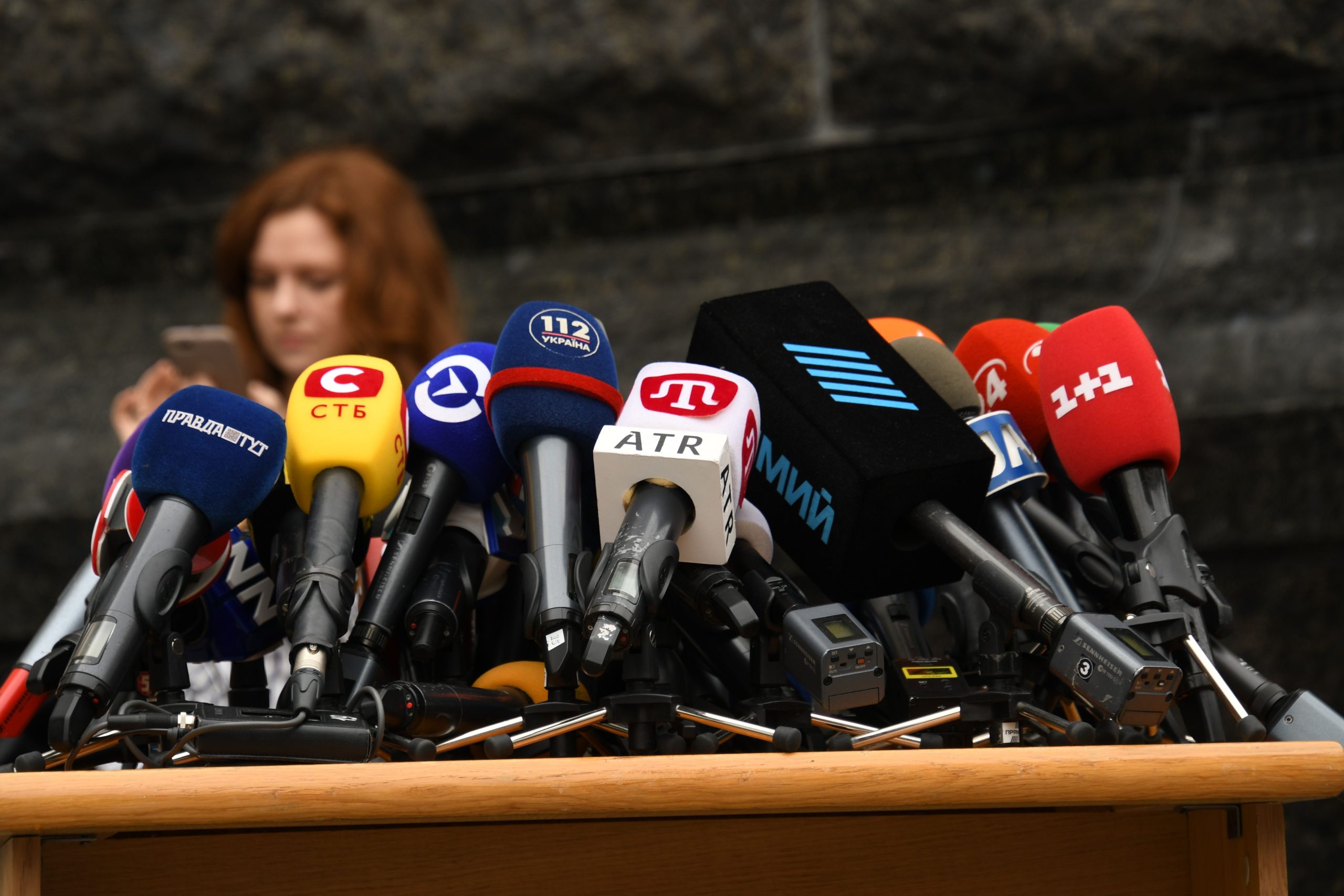
For the first time in the 25-year history of the World Press Freedom Index, more than half the world’s countries and territories sit in its two worst categories. The 2026 edition, published by Reporters Without Borders (RSF) on 30 April, placed 52.2% of the 180 countries surveyed in “difficult” or “very serious” territory, against 13.7% in 2002. The global average score is the lowest RSF has recorded.
That headline conceals the more useful detail. The steepest single-year decline was not at the bottom of the table. It was in the legal indicator, one of the five environments RSF scores, which fell in 110 of 180 countries, including several established democracies. Laws, not censors, are doing much of the work.
This piece sets out the trends that shaped 2026, and it ends with something the rankings themselves cannot provide: how to read them without being misled.

The 2026 baseline in seven numbers
Before the analysis, the raw material. Each figure below is drawn from a primary source, with the date the organisation published it.
| Indicator | Latest figure | Source and date |
|---|---|---|
| Countries in the “difficult” or “very serious” press-freedom categories | 52.2% of 180 (up from 13.7% in 2002) | RSF World Press Freedom Index, April 2026 |
| Countries whose legal-indicator score fell year on year | 110 of 180 | RSF, April 2026 |
| Journalists and media workers killed worldwide | 129 in 2025, a record | Committee to Protect Journalists (CPJ), February 2026 |
| Journalists jailed in connection with their work at year-end | 330 as of 1 December 2025 | CPJ prison census, January 2026 |
| Share of journalist killings that remain judicially unresolved | About 85% to 90% | UNESCO Observatory of Killed Journalists, 2024 to 2025 |
| Global trust in news | 37%, the lowest since 2015 | Reuters Institute Digital News Report, June 2026 |
| US counties with no local news source or only one | 1,737 counties, home to roughly 50 million people | Medill Local News Initiative, Northwestern University, 2025 to 2026 |
The pattern in that table is not a single crisis. It is several pressures moving at once, and they reinforce one another.
Trend one: the law is replacing the traditional censor
For most of the index’s history, the clearest sign of a closing media environment was a shuttered newsroom or a disappeared reporter. In 2026, the dominant mechanism is quieter. RSF reported that its legal indicator deteriorated in more than 60% of the countries it assesses, and singled out the expansion of national security laws, emergency powers, and anti-terrorism statutes as the main driver.
The numbers behind that shift are stark. In its January 2026 prison census, CPJ found that 61% of all imprisoned journalists had been held on anti-state charges, a category that includes terrorism, sedition, and offences against national unity. Those charges are typically harder to examine in open court than a straightforward criminal allegation, and they carry long potential sentences.
A parallel instrument is the SLAPP, short for strategic lawsuit against public participation. A SLAPP is not a criminal prosecution. It is a civil claim, often for defamation, filed against a journalist, publication, or civil society group in a way that is expensive and slow to defend. The European Union adopted Directive (EU) 2024/1069 in April 2024 to create procedural safeguards for cross-border cases, including early dismissal of manifestly unfounded claims and cost recovery for defendants. Member states were required to transpose it into national law by around May 2026, and the bloc has paired it with the European Media Freedom Act.
None of this means that defamation law or security legislation is illegitimate in principle. The point is narrower: when the same legal tools are used repeatedly against reporting on matters of public interest, the effect can be a chilling one that no official censorship order ever records.
Trend two: a record year for killings, and a widening accountability gap
CPJ reported that 129 journalists and media workers were killed in 2025, the highest total since the organisation began keeping records in 1992 and the second consecutive annual record. At least 104 of those deaths occurred in conflict zones. The organisation also documented 47 targeted killings, which it classifies as murder, the highest number in a decade.
What makes the trend more troubling than a single bad year is the aftermath. According to CPJ, no one has been held accountable in any of the 2025 targeted killings. UNESCO’s separate monitoring reaches a similar conclusion at a wider scale: across nearly two decades, around 85% to 90% of journalist killings remain judicially unresolved. The organisation notes that impunity tends to be a symptom of weakened courts and is associated with further attacks.
One newer element deserves attention. CPJ recorded a sharp rise in deaths caused by drones, from two cases in 2023 to 39 in 2025, with military drones implicated in most of them. That is a change in the technology of the threat, not just its volume, and it makes independent verification harder because the equipment is often remote and the evidence scattered.
Trend three: the decline is no longer confined to authoritarian systems
It would be convenient to treat press freedom as a problem of closed regimes. The 2026 data does not support that framing. RSF reported that the United States fell seven places to 64th, a shift the organisation linked to sustained political pressure on the press and to cuts at the US Agency for Global Media. Those cuts had effects well beyond one country: they led to the closure, suspension, or downsizing of international broadcasters that had served as some of the few reliable information sources in parts of Africa, Asia, and Eastern Europe.
European democracies show their own friction. RSF found that the European Media Freedom Act, designed to protect editorial independence and media sustainability, has been repeatedly tested by national legislative proposals in member states. RSF also reported that protection mechanisms for journalists are seen as non-existent or ineffective in more than 80% of the countries it analyses, a finding that applies to wealthy democracies as much as to fragile ones.
The common thread is not ideology. It is that legal and political pressure on the press rises during periods of polarisation, and that democracies are not immune to it.
Trend four: the economics of news have become a free-press question
A newsroom that cannot pay its staff cannot hold anyone to account, and the financial pressure worsened in 2026. The analytics firm Chartbeat reported a 40.2% year-over-year decline in Google Search referrals across its publisher network between July 2025 and July 2026, steeper than the 21.9% decline in the year before. Generic, easily summarised content was the most exposed, while original reporting proved harder to replace. AI chatbots remain a small source of referral traffic, well under 1% of pageviews in the same dataset, even as their use for news grows.
The consequences are uneven. The Reuters Institute’s Digital News Report 2026, based on a survey of almost 100,000 people across 48 markets, found that social media and video networks are now the most widely used sources of news globally, ahead of both television and publishers’ own websites and apps. For the first time, a majority of respondents in all 48 markets watched online news video in a given week.
Where outlets close, the loss is cumulative rather than gradual. Medill’s research found that the United States has lost about 40% of its newspapers in two decades, roughly 3,500 titles, leaving 212 counties with no local news source at all and another 1,525 with only one. Reporting shows that communities that lose local coverage tend to see weaker civic participation and that residents increasingly turn to non-journalistic sources, which matters because those sources do not share the same verification practices. Nonprofit and member-funded models are growing in several markets, though researchers caution that philanthropy is not a universal substitute for a functioning business model.
Trend five: online violence is quietly shaping what gets reported
The most consequential threats are not always the most visible. In a 2026 report produced with UN Women and the International Center for Journalists, researchers found that 45% of surveyed women journalists and media workers reported self-censoring on social media because of online violence, and almost 22% reported self-censoring in their work. Roughly a quarter had been diagnosed with or treated for anxiety or depression connected to the abuse, and about 13% reported a diagnosis of post-traumatic stress disorder.
UNESCO’s broader World Trends report estimated that self-censorship among journalists rose by about 63% between 2012 and 2025. The European Federation of Journalists found that 60% of its respondents reported an increase in online attacks, with much of the abuse going unreported. A separate study of 1,600 US journalists found that 61% reported being threatened, with broadcasters, younger reporters, women, and journalists of colour targeted most often. The common thread in all three datasets is that harassment does not only harm individuals. It changes which stories are pursued.
How to read a press-freedom ranking without being fooled
The RSF index is a composite measure. It scores five environments: political, legal, economic, socio-cultural, and security. A country’s position reflects the sum of those indicators, which is why two nations can occupy the same category for entirely different reasons. That is a feature, not a flaw, but it means a ranking is a comparative signal rather than a legal finding.
Composite indices are also debated. Researchers and some governments argue that a single score compresses very different situations, and that enforcement of hate speech, defamation, or national security law can be legitimate and is not automatically censorship. The most defensible way to use any index is to treat it as the beginning of a question rather than the answer.
Global averages flatten a great deal: two countries can share a category for entirely different reasons, and the detail that explains a national shift usually turns up in daily media and press freedom coverage rather than in the aggregate score itself. Read the methodology, check which year the data covers, and compare like with like before drawing conclusions.
For the 2026 cycle specifically, the RSF World Press Freedom Index report is the primary document behind most of the rankings cited in news coverage, and it explains which indicators moved and why.
What this means for citizens, in practice
Press freedom is often described as a right that belongs to journalists. In practice it is a precondition for everyone else’s ability to make decisions. If courts can be used to exhaust a newsroom, if reporters are killed without consequence, and if local coverage disappears, the information available to voters, patients, parents, and consumers narrows with it.
The practical responses are modest but real.
- Pay attention to local coverage, including outlets that are small, nonprofit, or subscription-funded. Local accountability reporting is the layer most exposed to closure.
- Check provenance before sharing. Look for a named author, a date, an original source, and evidence that the outlet corrects errors.
- Treat AI-generated summaries as pointers, not sources. In the Reuters Institute data, trust in chatbot answers for news sat at 20%, against 37% for news overall.
- Look to official records for procedural facts such as election rules, because those are the claims most easily distorted when local reporting is thin.
- Notice self-censorship, including your own. The research suggests it is rising, and it is hardest to measure precisely because it leaves no trace.
The through-line in the 2026 numbers is that pressure on the press has become more legal, more economic, and more digital. None of those levers looks like a censored front page, which is exactly why they are easy to miss.
Frequently asked questions
Is press freedom genuinely getting worse, or is it just being measured more closely?
Both effects are present, but the weight of evidence points to genuine deterioration. RSF’s average score across 180 countries is the lowest in the index’s 25-year history, and the share of countries in its two worst categories has risen from 13.7% in 2002 to 52.2% in 2026. CPJ’s killing and imprisonment counts are based on investigations of individual cases rather than on an opinion survey, which limits the scope for a measurement artefact.
Which regions are most dangerous for journalists?
RSF describes Eastern Europe and the Middle East as the two most dangerous regions for journalists, a pattern it says has held for 25 years. CPJ’s 2025 data shows that the majority of killings occurred in conflict zones, with organised crime a leading driver in parts of Latin America. The danger is not evenly distributed within regions, and country-level data matters more than regional averages.
What exactly is a SLAPP?
A SLAPP is a strategic lawsuit against public participation, a civil claim filed not to win a genuine case but to impose cost, delay, and stress on a journalist, publication, or advocacy group. The EU’s Directive (EU) 2024/1069, in force since May 2024, gives courts tools to dismiss manifestly unfounded cross-border claims early and to award costs against abusive claimants. National cases fall mainly under a parallel 2022 recommendation rather than the directive.
Does press freedom matter to people who never read a newspaper?
It usually does, indirectly. Declines in local reporting have been linked to lower local election turnout, less competitive local races, and higher government borrowing costs in affected communities. Information gaps also tend to be filled by unverified material, which makes it harder to judge claims about public services, safety, or spending.
What is a news desert?
A news desert is a community with limited or no access to credible, comprehensive local news. Medill’s research identifies 212 such US counties, plus 1,525 more with only one remaining local source. The term also covers “ghost” newsrooms that still publish but no longer produce original local reporting.
Does AI make press freedom better or worse?
It cuts both ways, and the net effect in 2026 is difficult to call. AI tools lower the cost of producing and translating information, and chatbot referrals to publishers grew sharply, though they still account for well under 1% of pageviews in the data available. At the same time, AI-generated answers reduce the clicks that fund newsrooms, and AI-enabled deepfakes and impersonation are being used to harass journalists. The CPJ prison census and UNESCO’s research both treat the digital environment as a central variable rather than a side issue.
How this article was put together
The figures here come from primary sources published between October 2024 and September 2026: the RSF World Press Freedom Index (April 2026), CPJ’s prison census (January 2026) and killings reporting (February 2026), UNESCO’s Observatory and World Trends reporting (2025), the Reuters Institute Digital News Report (June 2026), Medill’s local news research, European Federation of Journalists survey work, and UN Women’s 2026 Tipping Point report. Where data collection methods differ, the article names the organisation rather than merging the numbers. Composite index scores are self-reported and revised annually, so positions and scores should be rechecked after each new edition.